Achilles pain after running?

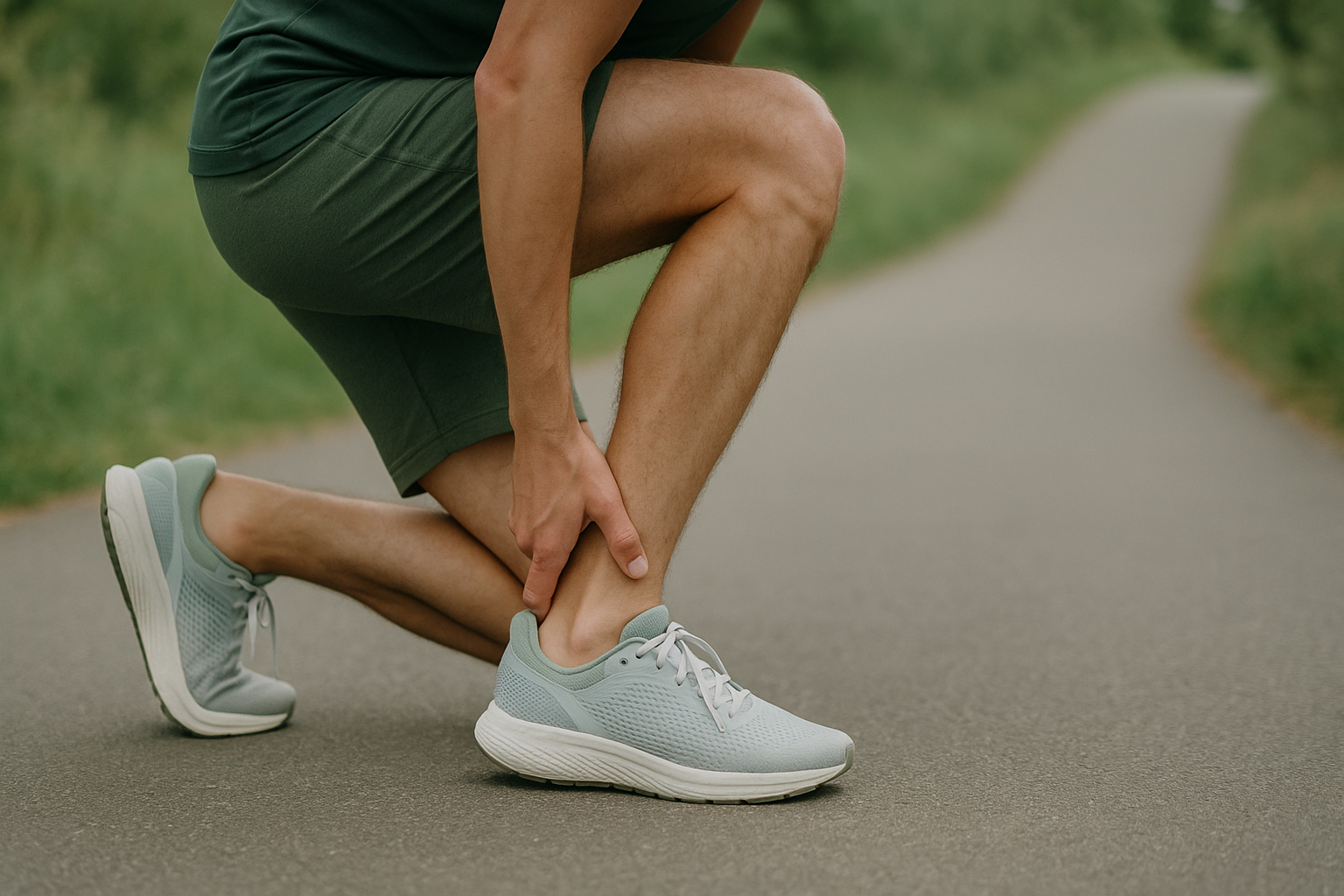
Back-of-heel pain after a run often shows up exactly here. Use the image as a location guide, not a diagnosis. Image: AI-generated by PainFreeU.
Pain at the back of the heel or lower calf after running usually asks for one thing first: slow down and read the signal. Not panic. Not five random exercises. Check how strong it is, whether you limp, and what the tendon says later today and tomorrow morning.
Updated 7 June 2026. Educational self-care support, not medical diagnosis.
Can you run with Achilles pain after running?
You may be able to keep running if the pain stays mild, does not change your stride, and is not worse later or the next morning. Stop and get assessed if you felt a pop, cannot push off, cannot walk normally, or swelling/bruising appears fast.
The bit many guides skip
Most running articles jump straight to stretches and calf raises. Useful sometimes. Too fast if the tendon is already shouting. In PainFreeU we start one step earlier: read the signal, check the load, and then decide what the next run should look like. The sore tendon is the alarm. Calf tension, pressure, recovery and the week you asked your body to handle can all be part of why the alarm got loud.
Can I run with Achilles pain?
Use a simple rule. Running is only reasonable when the pain is mild, predictable, does not climb during the run, does not make you limp, and is not worse within 48-72 hours. If you start protecting the step, or the first steps next morning are worse, the body has already answered. That load was too much for now.
First 48-72 hours
Do less, not nothing forever. Avoid hills, speed work and long runs. Walk if walking is comfortable. Keep the next test short and flat. The important part is the response after the session, not only how brave you felt during it.
Where lymphatic treatment fits
In PainFreeU language, Achilles pain can be a pressure signal. The calf is the pump above the tendon. If the pump is tight, tired or overloaded, flow through the lower leg can feel stuck. Lymphatic treatment here does not mean forcing the tendon. It means testing one safe passage with tolerable pressure, then measuring the same symptom again. If the number changes, the body gave you a clue.
Return-to-run criteria
Before building again, you want normal walking, no next-morning spike, no limp, and gentle calf loading that does not make symptoms flare. Start with easy flat running. Add distance before pace. Add hills and speed last.
Why Achilles pain happens after running
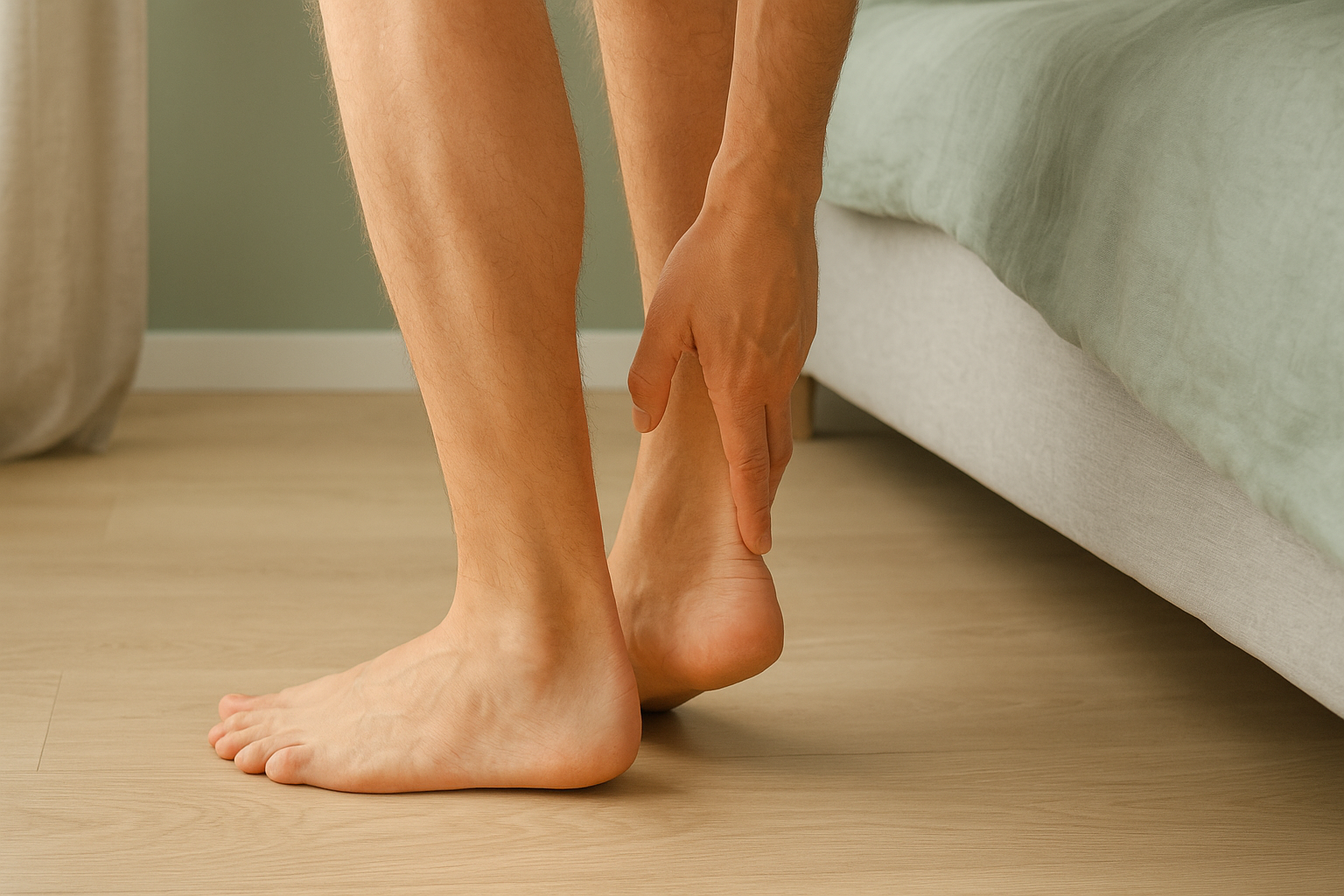
Common triggers are simple: more distance, more hills, speed work, new shoes, less recovery, or a calf that was not ready for the week you gave it. The first useful question is not “which exercise fixes this?” It is: what changed, and what does the tendon do during the next 48–72 hours?
Mid-portion or insertional Achilles pain?
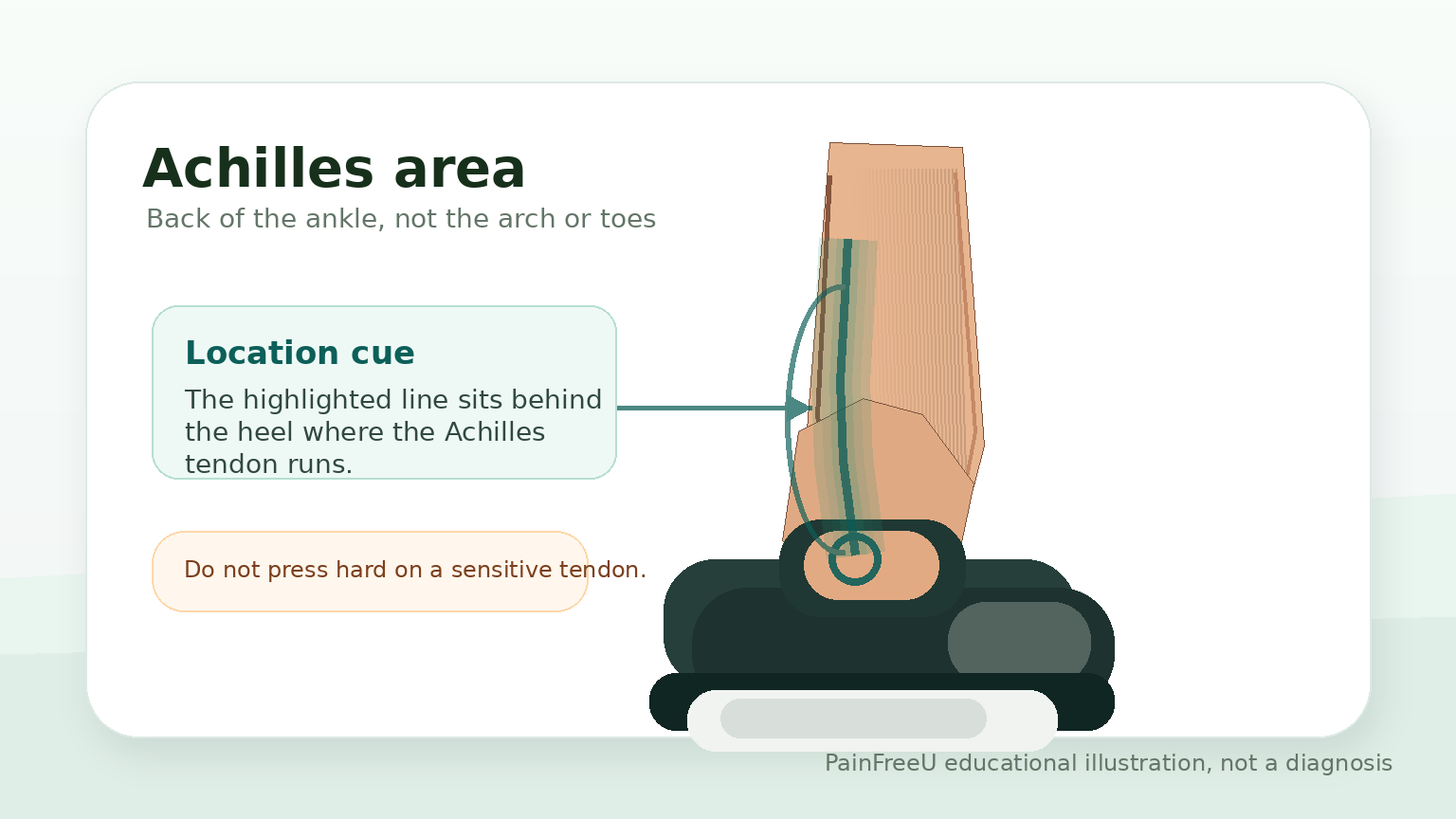
Pain higher up in the tendon and pain right where the tendon meets the heel can behave differently. Both deserve the same first respect: measure, reduce noise, and do not attack the sore spot. Avoid aggressive stretching or hard pressure directly on a sensitive tendon if it makes symptoms sharper.
A simple decision guide
Load spike
More hills, speed, volume or consecutive runs can irritate the Achilles.
Morning check
First-step stiffness the next day tells you more than optimism during the run.
Last to return
Hills, sprints and long runs come after easy flat runs feel stable.
Green, yellow or red?
Mild, predictable, no limp, settles within 24 hours.
Pain increases, lingers next morning, or changes your stride.
Pop, snap, rapid swelling/bruising, cannot push off, cannot walk normally.
The PainFreeU measured loop
Do not test five things at once. Choose one symptom or movement. Score it from 0-10. Test one safe passage. Then repeat the exact same score. The number is not a diagnosis. It is a body signal.
For hands-on pressure, discomfort around 5-6/10 can be enough. If it reaches 7-8, reduce pressure or stop. Stop immediately for sharp, electric, scary, neurological or rapidly worsening symptoms.
Full safety note
Full safety note: seek medical help for a sudden pop or snap, severe pain, rapid swelling or bruising, inability to bear weight, fever, spreading redness or warmth, or pain that keeps worsening. If you use Warfarin/Marevan or another blood thinner, have known lymph cancer or lymph disease, are in active cancer treatment, or have new, severe or unexplained pain, ask a qualified health professional before hands-on self-care.
If you want one guided next step
PFU Pocket helps you run the measured loop without guessing five things at once. Running Coach is for the running-load decision when the signal is mild enough to plan from. Neither replaces medical assessment.
Test one step in PFU PocketMake a calmer running weekSources used for safety and context
These sources support general medical and safety context. They do not prove PainFreeU’s method or replace individual assessment.
FAQ
Can I run with Achilles pain after running?
Only if it stays mild, does not change your stride, and is not worse later or the next morning. Stop if pain rises, you limp, or the 48-72 hour response is worse.
When is Achilles pain urgent?
Seek care quickly if you felt a pop or snap, cannot stand on tiptoe, cannot walk normally, or rapid swelling and bruising appear.
Can PFU Pocket fix Achilles tendinitis?
PFU Pocket does not diagnose or cure tendinopathy. It can guide a measured self-care loop so you test one safe passage and compare the same symptom before and after.
Why use Running Coach here?
Running Coach is for load, progression and calmer return-to-run planning. It is not a medical diagnosis or injury treatment.